
BOMAT — GETTING MORE OUT OF ENERGY
As a leading original equipment manufacturer of flue gas heat exchangers and a specialist in industrial waste heat solutions, Bomat is your go-to partner for all matters relating to condensing boiler technology. Our unique, patented ceramic technology is the result of many years of pioneering work. Our success is based on continuous innovation.
Bomat moved into its newly constructed production and administration building in Überlingen at the start of 2007; in 2026, Bomat became part of the Raab Group.
We are your specialist in energy efficiency solutions—since 1982!

PRODUCT OVERVIEW
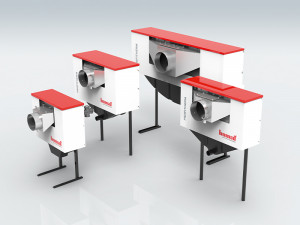
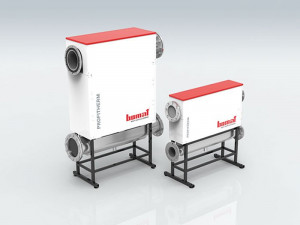
Systems for heat recovery, heat storage and use of renewable forms of energy
INDUSTRY SECTORS
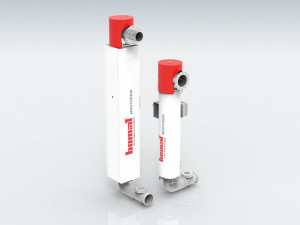
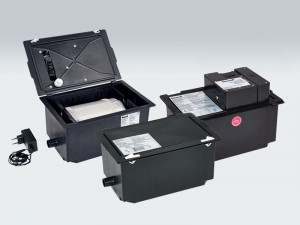
Custom-designed Bomat exhaust gas heat exchangers and neutralization systems for our customers

WE ARE YOUR OUTSOURCING ASSEMBLY COMPANY
Assembly of your products in batch sizes that are uneconomical for you
Bomat Condensing Technology for CHP Plants –
: Put in less, get more out
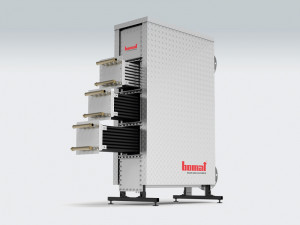
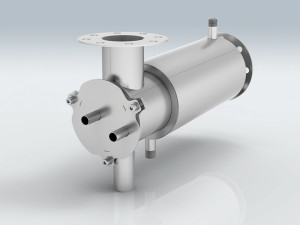
CHP Heat Exchangers: Ceramic Lasts Longer
Conventional flue gas heat exchangers in combined heat and power (CHP) plants are generally operated above the condensation point. Nevertheless, condensation – and consequently corrosion – can occur in the heat exchanger during start-up or at low cooling water temperatures. When sulphur-containing fuels (oil, gas, biogas) are combusted, sulphurous acid is produced. Depending on the combustion temperature and the catalyst technology, nitric acid may be formed as a result of a reaction between the condensate and NOx. Nitric acid and sulphurous acid are responsible for acid rain. Bomat uses patented ceramic heat exchangers that are 100% corrosion-resistant. These ensure pollutant-free condensation and offer impressive durability.
Use energy more efficiently.
Many conventional CHP units have a thermal efficiency of around 50 per cent. Bomat utilises the latent heat in the flue gas to generate additional heat. Bomat’s condensing technology can increase thermal efficiency by up to 10 per cent.
This also helps protect the environment, as significantly fewer pollutants are released into the air via the chimney.